
Time Limit for filing a written statement under CPC is directory and not mandatory

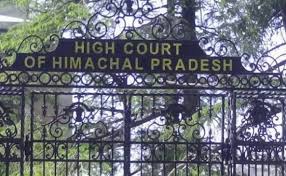
In Bhuvneshwar vs. Katku, the High Court of Himachal Pradesh ruled that the time limit for filing a written statement under Order VIII Rule 1 of the CPC is directory and not mandatory for suits not governed by the Commercial Courts Act. The Court established that procedural law is intended to expedite rather than scuttle hearings, and it does not impose an absolute embargo on the court’s inherent power to extend time beyond the stipulated 90-day schedule. Reaffirming that a defendant’s right to contest should not be extinguished for “curable procedural lapses,” the Court held that trial courts must issue speaking orders when striking off a defense and should prefer compensatory costs over the unreasonable denial of the benefit of filing a written statement.

  1. Factual Background and Trial Court Action

The petitioner (defendant) was sued for a mandatory injunction and was served with a summons on January 16, 2026. The trial court initially adjourned the matter to April 7, 2026, and subsequently to May 5, 2026, to allow the defendant to file a written statement. On the latter date, the Senior Civil Judge, Sundernagar, struck off the defendant’s right to file the statement, reasoning that the statutory period had expired and that the defendant was “lingering on the matter intentionally” despite being afforded ample opportunities.

  1. Legal Nature of Order VIII Rule 1 CPC

The High Court clarified the legal standing of time limits for filing written statements in non-commercial suits:

  • Directory, Not Mandatory: Relying on Supreme Court precedents (Kailash vs. Nanhku and Bharat Kalra vs. Raj KishanChabra), the Court held that the proviso to Order VIII Rule 1 is couched in the domain of procedural law.
  • No Absolute Embargo: While the language appears negative, it does not specify penal consequences for non-compliance, meaning the court’s power to extend time is not completely taken away.
  • Expediting Justice: The purpose of the time schedule is to facilitate a speedy trial, but it must not be used to arbitrarily deny a party their right to be heard.
  1. Failure of the Trial Court to Provide a “Speaking Order”

The High Court found the trial court’s order to be legally unsustainable due to a lack of substantive reasoning:

  • Absence of Specifics: The impugned order was completely silent on the specific facts that led the trial court to conclude the defendant was “intentionally” delaying the matter.
  • Premature Closure: The High Court noted that the trial court had granted only two prior opportunities before striking off the defense, which did not justify a finding of intentional procrastination.
  1. Establishing “Sufficient Cause” via Evidence

The petitioner successfully demonstrated a bona fide reason for the delay in the revision petition:

  • Urgent Travel: The defendant produced a boarding pass proving he was compelled to travel outside the State for urgent and unavoidable business affairs.
  • Inability to Instruct Counsel: This absence prevented him from providing necessary documents or instructions to his counsel to prepare the written statement in time.
  1. Balancing Equities through Costs

The Court emphasized that when a delay can be appropriately compensated with costs, denying the right to file a written statement is “unreasonable”. This approach ensures that the plaintiff is compensated for the inconvenience of the delay while the defendant’s right to a fair trial on the merits is preserved.

Final Outcome

Exercising its power under Article 227 of the Constitution, the High Court set aside the trial court’s order. The defendant was directed to appear before the trial court on July 3, 2026, and file his written statement within seven days thereafter, subject to the payment of ₹5,000 in costs to the plaintiff.

STPL (Web) 2026 HP 336

Bhuvneshwar V. Katku (D.O.J. 19.06.2026)

Loading Viewer...

Next Story

Additional Avidence Application Cannot be Heard independently or in isolation

In Madan Lal vs. Suresh Kumar (Deceased) through LRs &Anr., the High Court of Himachal Pradesh set aside an order of the First Appellate Court for a significant procedural impropriety regarding the admission of additional evidence. The Court ruled that an application under Order XLI Rule 27 of the CPC cannot be adjudicated independently or in isolation prior to the final hearing of the main appeal. Reaffirming established Supreme Court precedents, the Court held that the necessity of additional evidence can only be determined when the appellate court examines the entire record during the hearing on merits; therefore, such applications must be taken up and decided alongside the main appeal to ensure a satisfactory pronouncement of judgment.

  1. Factual Background and Procedural Challenge

The petitioner, Madan Lal, preferred a first appeal against a trial court judgment and decree from 2025. During the pendency of this appeal before the District Judge, Kullu, the petitioner moved an application under Order 41 Rule 27 of the CPC seeking permission to prove a document known as a “Patta” as additional evidence. The First Appellate Court decided this application independently on May 25, 2026, and separately listed the main appeal for a final hearing on a later date. The petitioner challenged this isolated disposal under Article 227 of the Constitution, arguing it was a technical and legal error to decide the application before the main appeal.

  1. Impropriety of Isolated Disposal

The High Court emphasized that deciding an application for additional evidence prior to hearing the main appeal is legally inappropriate and procedurally flawed. The Court clarified the following principles:

  • Stage of Decision: The proper stage to consider an application under Order 41 Rule 27 is at the time of the final hearing of the appeal on its merits.
  • Determination of Necessity: It is only when the appellate court delves into the records during the final hearing that it can truly determine if the additional evidence is required to enable it to pronounce judgment or to clear up obscurities in the interest of justice.
  • Judicial Discretion: If the court finds the document necessary for a more satisfactory decision, it allows the application; otherwise, it is dismissed at that stage.
  1. Reliance on Supreme Court Precedents

The High Court’s ruling was buttressed by several landmark Supreme Court decisions:

  • State of Rajasthan vs. T.N. Sahani (2001): Established that taking a view on the application before the hearing of the appeal is inappropriate.
  • Eastern Equipment & Sales Limited vs. Ing. Yash Kumar Khanna (2008): Reiterated that the appellate court ought to take up the pending appeal along with the application for additional evidence.
  • K. Venkataramiah vs. Seetharama Reddy (1963): Clarified the scope of using additional evidence to fill obscurities so the court can pronounce judgment in a satisfactory manner.
  1. Final Outcome and Directions

Finding that the order dated May 25, 2026, failed to withstand judicial scrutiny, the High Court allowed the petition and set aside the isolated order. The Court issued the following directives:

  • Revival of Application: The application under Order 41 Rule 27 CPC was ordered to be revived to its original number.
  • Joint Adjudication: The District Judge, Kullu, was requested to take up and decide the application along with the main appeal at the time of its final hearing.
  • Fresh Decision: The appellate court must now consider both the appeal and the application afresh in accordance with the law.

STPL (Web) 2026 HP 335

Madan Lal V. Suresh Kumar (Deceased) Through Lrs&Anr. (D.O.J. 19.06.2026)

Loading Viewer...
Next Story

Right of Private Defence Available Against Mischief by Government officials

In State of H.P. vs. Gulat Ram &Ors., the High Court of Himachal Pradesh upheld the acquittal of individuals accused of obstructing forest officials, ruling that peaceful, settled possession creates a legal right to defend property against unauthorized administrative action. The Court established that even a rightful owner (including the State) cannot unilaterally use force to evict a trespasser in settled possession without strictly following the due process of law. Furthermore, the Court invalidated the use of Patwari-prepared demarcation reports to prove forest encroachment, holding that a village Patwari is not legally competent to define official land boundaries.

  1. Scope of Appellate Power in Acquittals

The High Court reiterated the restricted parameters for interfering with a judgment of acquittal. It held that interference is only warranted if the judgment suffers from patent perversity, a clear misreading of evidence, or if the decision is “clearly unreasonable”. If two reasonable views are possible from the evidence, the appellate court is legally bound to accept the view consistent with the innocence of the accused rather than substituting its own opinion for that of the lower court.

  1. Settled Possession and the Right of Private Défense

The core of the dispute involved forest officials attempting to demolish shops that were decades old. The Court emphasized several key legal protections:

  • Protection Against Force: A person in peaceful, settled possession is entitled to retain that possession even against the rightful owner.
  • Recourse to Law: Owners intending to evict such occupants must obtain a formal order from a competent authority or Collector; they cannot take the law into their own hands.
  • Mischief by Officials: Because the forest officials attempted a summary demolition without a lawful eviction order, their actions constituted the offense of “mischief”.
  • Reasonable Force: Consequently, the shop occupants were fully justified in using reasonable force to defend their property under the right of private defense.
  1. Rejection of Constructive Liability (Unlawful Assembly)

The prosecution sought to convict the group under Sections 147 and 149 of the IPC for rioting and unlawful assembly. The High Court ruled that an assembly of five or more persons gathered specifically to defend property or body within the bounds of the law cannot be designated as an “unlawful assembly”. Since the common object of the gathering was defensive rather than criminal, the essential elements for constructive liability were absent.

  1. Incompetency of Patwari for Land Demarcation

To prove that the structures were on forest land, the prosecution relied on a tatima (map) and demarcation report prepared by a village Patwari. The High Court held that a Patwari lacks the legal competence to provide an official demarcation of land boundaries. As a result, such reports cannot be used as valid evidence to establish encroachment, meaning the prosecution failed to conclusively prove the structures were within the reserve forest.

  1. Credibility and Material Improvements

The Court noted significant discrepancies in the testimonies of the forest officials. In court, multiple witnesses claimed they were “pushed” or “manhandled” by the accused, yet this specific allegation was entirely absent from the initial written complaint and the FIR. The Court categorized these additions as material improvements that cast serious doubt on the veracity of the prosecution’s entire narrative, justifying the decision to disbelieve the oral testimonies.

Final Outcome

Finding that the First Appellate Court had taken a highly plausible and reasonable view based on the structural deficiencies in the prosecution’s case, the High Court dismissed the State’s appeal and upheld the acquittal.

STPL (Web) 2026 HP 334

State of H.P. V. Gulat Ram &Ors. (D.O.J. 19.06.2026)

Loading Viewer...

Next Story

Look Out Circular Issued in Matrimonial Dispute Quashed

In Abhishek Gautam vs. UOI &Ors., the High Court of Himachal Pradesh quashed a Look Out Circular (LOC) issued against a Senior Scientist working in New Zealand, ruling that an LOC is a coercive measure intended only for cases where an accused is deliberately evading arrest or trial. The Court established that recourse to such a circular is legally unsustainable in matrimonial disputes when the accused has never been served a prior notice and is not facing charges related to national security or financial irregularities. Reaffirming the fundamental right to travel, the Court held that issuing an LOC in “haste” without fulfilling the statutory prerequisites of the 2021 Ministry of Home Affairs guidelines constitutes an arbitrary restriction on an individual’s career and movement.

  1. Factual Background and Detention

The petitioner, a permanent resident of Himachal Pradesh and a Senior Scientist in New Zealand, was apprehended and detained by immigration officials at Indira Gandhi International Airport upon his arrival in India in February 2026. The detention was based on an LOC initiated by the Station House Officer (SHO) of Police Station Baddi in connection with an FIR alleging matrimonial cruelty under Sections 85 and 3(5) of the Bharatiya Nyaya Sanhita (BNS), 2023. Following his detention, the petitioner joined the investigation and cooperated with the authorities.

  1. Legal Criteria for Issuing an LOC

The High Court examined the 2021 Ministry of Home Affairs guidelines, which dictate the circumstances under which an investigating agency can seek an LOC. According to the settled law:

  • Deliberate Evasion: Recourse to an LOC is reserved for cognizable offenses where the accused is deliberately evading arrest or failing to appear in court despite the issuance of Non-Bailable Warrants (NBWs) and other coercive measures.
  • Flight Risk: There must be a credible likelihood that the accused will flee the country specifically to evade the legal process.
  1. Findings on Procedural Lapses

The Court found that the LOC against the petitioner was issued in “haste” and lacked the necessary legal foundation:

  • Lack of Notice: The respondents failed to prove that any prior communication or notice regarding the FIR had been served to the petitioner before he was placed on the circular.
  • No Evasion: Since the petitioner was unaware of the requirement to join the investigation, he could not be classified as someone “deliberately evading” justice.
  • Nature of Offenses: The Court noted that the petitioner was facing charges of matrimonial cruelty—which carry a maximum punishment of three years—rather than offenses involving national security, sovereignty, or major financial scams.
  1. Balancing Travel Rights and Trial Participation

While the petitioner sought to return to New Zealand to resume his professional duties, the respondent (his wife) expressed concerns that he would not return for trial. To balance these interests, the Court quashed the LOC but imposed strict financial and procedural safeguards to ensure his appearance:

  • Fixed Deposit: The petitioner must deposit a Fixed Deposit Receipt (FDR) of ₹5 lakh with the Trial Court.
  • Sureties: He must provide two local sureties of ₹2 lakh each.
  • Mandatory Appearance: He is required to personally appear for the trial scheduled for August 18, 2026, unless legally exempted.

Final Outcome

The High Court allowed the writ petition and quashed the Look Out Circular, permitting the petitioner to travel abroad once the specified deposits and undertakings are filed with the Trial Court.

STPL (Web) 2026 HP 333

Abhishek Gautam V. Uoi&Ors. (D.O.J. 17.06.2026)

Loading Viewer...

Next Story

Quashing of FIR: COVID – Quashed as no offence made put

In Purshotam Lal vs. State of HP, the High Court of Himachal Pradesh quashed a criminal prosecution against a petitioner intercepted for traveling in a COVID-19 containment zone without a valid curfew pass. The Court ruled that to sustain a charge under Sections 269 and 270 of the IPC, the prosecution must prove the accused had specific knowledge or reason to believe their actions were likely to spread a life-threatening disease. Since the petitioner had tested negative for COVID-19 and was not a carrier, his mere violation of movement protocols did not fulfill the statutory ingredients of spreading infection. Reaffirming its inherent powers under Section 528 of the BNSS, the Court held that continuing a trial where no prima facie offense is disclosed constitutes a clear abuse of the process of the court.

  1. Factual Background and Incident

The case arose from an incident on April 3, 2020, during the COVID-19 lockdown. The petitioner was intercepted by police at a checkpoint while traveling from Khatiyar towards Fatehpur. Although he produced an acknowledgment slip for a curfew pass, the police deemed it invalid, noting that the area (Golwan) had been declared a containment zone where movement was strictly prohibited. Consequently, an FIR was registered under Sections 188, 269, and 270 of the IPC and Section 51 of the Disaster Management Act.

  1. Withdrawal of Administrative Charges

During the pendency of the matter, the State withdrew the charges relating to Section 188 IPC (disobedience to order duly promulgated by public servant) and Section 51 of the Disaster Management Act. The prosecution continued solely for the offenses of negligently or malignantly performing acts likely to spread infection dangerous to life (Sections 269 and 270 IPC).

  1. Defense: Negative Infection Status

The petitioner sought the quashing of the FIR on the grounds that his actions could not have physically spread a disease. He asserted that he had traveled to Chandigarh for his brother’s medical treatment and was subsequently quarantined for 23 days, during which his COVID-19 test results were consistently negative. He argued that because he was not suffering from any infection, the core prerequisite for the charged offenses was absent.

  1. Legal Prerequisites for Sections 269 and 270 IPC

The High Court analyzed the statutory requirements for these offenses:

  • Knowledge and Belief: The accused must know, or have a reason to believe, that their act is likely to spread an infection.
  • Actual Risk: There must be material evidence showing the accused was either infected or a carrier of the disease at the time of the act.
  • Ruling on Lockdown Violations: The Court clarified that merely moving around without a valid pass or violating a protocol does not create a legal presumption that a person is an infectious carrier. Since the petitioner was healthy, there was “no question of knowing or having reason to believe” he would spread the virus.
  1. Inherent Powers to Quash (Section 528 BNSS / 482 CrPC)

Relying on landmark Supreme Court precedents like State of Haryana v. Bhajan Lal, the Court reiterated that it is obligated to exercise its inherent powers to prevent the abuse of legal machinery. Quashing is mandatory when:

  • The allegations in the FIR, even if accepted as true, do not prima facie constitute any offense.
  • The uncontroverted evidence fails to disclose the commission of a crime.
  • The prosecution is used to harass an individual despite the absence of foundational legal ingredients.

Final Outcome

The High Court concluded that since the petitioner was not infected, the allegations failed to show the commission of any offense under Sections 269 and 270 of the IPC. The petition was allowed, and the FIR, along with all consequential proceedings, was ordered to be quashed.

STPL (Web) 2026 HP 332

Purshotam Lal V. State of Hp (D.O.J. 16.06.2026)

Loading Viewer...

Recent Articles