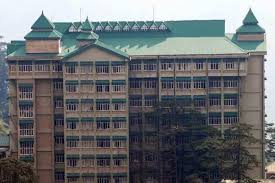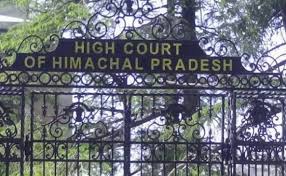


In Dr. Tilak Raj Sharma v. State of H.P. &Ors., the High Court of Himachal Pradesh quashed a charge-sheet and criminal proceedings against a petitioner accused of sending a highly derogatory email to a university scientist. The Court established that mere employment of vulgar, filthy, or abusive language to vent personal anguish does not automatically satisfy the statutory ingredients for criminal intimidation (Section 506 IPC) or intentional insult (Section 504 IPC) unless there is a clear intent to cause alarm or provoke an immediate breach of public peace. Furthermore, the Court ruled that the inherent power to prevent an abuse of the judicial process is “aggravated” rather than restricted once a charge-sheet is filed, especially when the prosecution’s case is bound to fail in all probabilities.
- Factual Background and Investigation
The case originated from an offensive email sent to a Senior Scientist at CSKHPKV, Palampur, in February 2019. The email contained extremely derogatory and scatological remarks targeting the complainant and his family, concluding with the colloquial threat “Tu to gaya”. The police traced the email’s originating IP address to a BSNL GSM connection registered in the name of the petitioner, Dr. Tilak Raj Sharma. Initially registered under Section 66A of the IT Act, the case was eventually transitioned into a charge-sheet under Sections 504, 506, and 507 of the IPC after the IT Act provision was struck down by the Supreme Court.
- Authority to Investigate Interconnected Offenses
The petitioner challenged the investigation’s legality, arguing that since Sections 504 and 507 are non-cognizable, the police required a prior order from a Magistrate under Section 155(2) of the Cr.P.C.. The High Court rejected this, citing the statutory deeming fiction in Section 155(4). Because Section 506 IPC is a cognizable and non-bailable offense in Himachal Pradesh, the police had full authority to investigate the entire “hub” of interconnected offenses together without a magisterial order.
- Failure to Establish “Intentional Insult” (Section 504 IPC)
The Court clarified that the gravamen of Section 504 is not the insult itself, but its potential to provoke a breach of public peace.
- Contextual Evaluation: The intentional insult must be evaluated against the background, occasion, and environment.
- Private vs. Public: The Court found that sending an abusive email to a private inbox was not calculated to cause a public disturbance or stimulate the commission of an offense.
- Legal Threshold: Mere act of insulting or using “filthy language” does not fulfill the requirements of the law if the intent to provoke a breach of peace is missing.
- Misapplication of Criminal Intimidation (Sections 506 & 507 IPC)
The Court found the charges of criminal intimidation unsustainable for the following reasons:
- Intent to Alarm: Under Section 506, the prosecution must prove a specific intent to cause alarm or panic. The Court viewed the phrase “Tu to gaya” as an expression of personal anguish rather than a physical threat designed to create real injury.
- IP Tracing vs. Anonymity: Section 507 specifically targets anonymous communications where the sender conceals their identity. The Court ruled this section was inapplicable because the prosecution’s own case relied on the communication being directly mapped and traced to the petitioner’s identifiable IP address.
- Quashing to Secure the Ends of Justice
The High Court emphasized that its inherent powers (preserved under Section 482 Cr.P.C. or Section 528 BNSS) are designed to ensure that court proceedings do not degenerate into weapons of personal harassment.
- Pre-trial Review: The High Court is entitled to quash proceedings at any stage—including after the filing of a charge-sheet—if the uncontradicted material fails to disclose the foundational ingredients of the charged offenses.
- Protracted Trial: Finding that a trial would only subject the petitioner to an unnecessary ordeal for a case destined to fail, the Court quashed the charge-sheet and discharged the petitioner.
STPL (Web) 2026 HP 316
Dr. Tilak Raj Sharma V. State of H.P. &Ors. (D.O.J. 14.05.2026)
Loading Viewer...