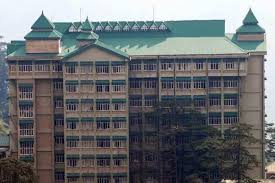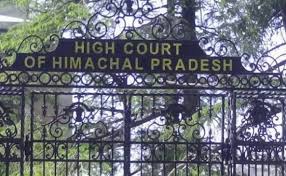


In Ankit Pachwaria vs. State of H.P. and Sarvagya Sharma vs. State of H.P., the High Court of Himachal Pradesh dismissed revision petitions challenging the framing of charges under Sections 20 and 29 of the NDPS Act. The Court reaffirmed that at the stage of framing charges, the trial judge is only required to determine the existence of a prima facie case based on “grave suspicion” rather than proof of guilt beyond reasonable doubt. Crucially, the Court clarified that while a judge must record reasons for discharging an accused, there is no statutory mandate to provide a detailed, reasoned order when choosing to frame a charge. Additionally, the Court ruled that in cases of “chance recovery” from a vehicle on a public road, the strict procedural requirements of Section 42 of the NDPS Act regarding prior information do not strictly apply, and any alleged non-compliance is a matter to be adjudicated during the full trial rather than at the discharge stage.
- Factual Background and Recovery
The case arose from a police “Naka” (checkpost) search conducted on May 25, 2023. Police stopped a private vehicle and, noting the suspicious behavior of the occupants, conducted a search that led to the recovery of 328 grams of charas. The petitioners, who were the driver and passenger, were arrested and subsequently charged with offenses under the Narcotic Drugs and Psychotropic Substances (NDPS) Act.
- Legal Standard for Framing Charges
The petitioners contended that the trial court failed to properly evaluate the evidence before framing charges. The High Court rejected this, emphasizing established legal principles:
- Prima Facie Opinion: At this initial stage, the court must form a presumptive opinion on whether the factual ingredients of the offense exist.
- No Meticulous Analysis: It is impermissible for a court to undertake a “threadbare analysis” of the evidentiary value or determine if the trial is “sure to end in a conviction”.
- Sift and Weigh: While the court may sift the evidence to see if grounds for proceeding exist, it cannot evaluate the “pros and cons” or the probability of the defense, as those are matters for the final trial.
- Distinction Between Discharge and Framing Charges
A primary argument raised by the petitioners was that the trial court’s order was not a “speaking order” and failed to address their specific grounds for discharge. The High Court clarified the statutory scheme:
- Section 227 vs. Section 228: Under the law, a judge is only required to record reasons if they decide to discharge an accused (Section 227/239).
- No Mandatory Reasons for Charges: There is no legal requirement to write a detailed, reasoned order when framing a charge (Section 228/240). The act of framing the charge itself serves as a prima facie order indicating the judge’s satisfaction with the record.
- Avoiding Roadblocks: Forcing courts to write exhaustive interlocutory orders at this stage adds “unnecessary extra work” and risks the premature disclosure of the judicial mind regarding final guilt.
- Compliance with Section 42 of the NDPS Act
The petitioners argued that the police failed to comply with Section 42 of the NDPS Act, which they claimed was fatal to the case. The Court held:
- Chance Recovery: Because the contraband was found during a routine check rather than based on “prior information,” the strictures of Section 42 do not apply.
- Matter of Trial: Even if there were procedural lapses in search and seizure, such issues are questions of fact involving appreciation of evidence and cannot be used as a ground for discharge.
- Defective Investigation and Adverse Inference
The petitioners pointed to gaps in the investigation, such as the failure to collect CCTV footage. The Court ruled:
- No Adverse Inference: An adverse inference for “withholding evidence” can only be drawn if the prosecution possesses evidence and refuses to produce it. It does not apply to evidence that was never collected.
- Tainted Probe vs. Acquittal: A perfunctory or “slipshod” investigation is not a sufficient ground for discharge; rather, the court must evaluate the remaining evidence with greater circumspection during the trial.
- Limitations of Revisional Jurisdiction
The High Court emphasized that its revisional powers are deeply restricted. It cannot act as an appellate court to re-appreciate facts or seek out minor inconsistencies. Intervention is only warranted if the allegations are “patently absurd” or the foundational ingredients of the offense are entirely missing—conditions that were not met in this case.
STPL (Web) 2026 HP 306
Ankit Pachwaria V. State of H.P. (D.O.J. 02.06.2026)
Loading Viewer...