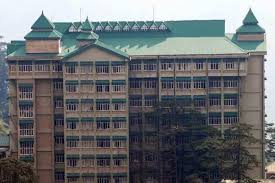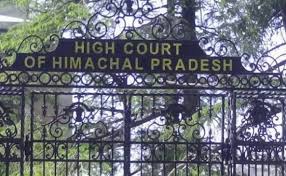


In Ruma Devi & Others vs. State of Himachal Pradesh and Others, the High Court of Himachal Pradesh quashed the State’s decision to disqualify candidates holding out-of-state diplomas for public service positions. The Court ruled that the State cannot arbitrarily narrow the window of public employment by restricting eligibility solely to graduates of a few domestic, inside-the-state institutions. Such an exclusionary application of recruitment rules, even in the absence of a formal challenge to the rules themselves, constitutes an artificial barrier that violates the fundamental right to equal opportunity in public employment guaranteed under Article 16 of the Constitution of India.
- The Dispute and Factual Background
The petitioners applied for the post of Panchkarma Masseurs under the State of Himachal Pradesh, possessing valid diplomas in Ayurvedic Nursing and Panchkarma Therapist from recognized institutions in Punjab and Mohali. Although they were invited for document verification, the State refused to offer them appointments. The sole ground for disqualification was that their diplomas were not recognized by the Government of Himachal Pradesh or the State Council for Vocational Training (SCVT), which was a mandatory precondition under Rule 7(a)(ii) of the 2022 Recruitment & Promotion Rules.
- Constitutional Rights vs. Narrow Eligibility Criteria
The High Court emphasized that the State’s power to reject candidates with legitimate credentials is strictly limited.
- Permissible Rejections: The State can only disqualify candidates if their diplomas are forged, fabricated, or issued by a non-existent setup that lacks statutory authority.
- Article 16 Violation: By disqualifying bona fide diplomas obtained from legitimate institutions nationwide while favoring local ones, the State created an arbitrary restriction. The Court held that the Government of Himachal Pradesh cannot “sit in judgment” over the veracity of valid out-of-state diplomas that are otherwise legitimate for employment across the country.
- Executive Discretion and the “Binding” Nature of Rules
The State argued that because the petitioners had not formally challenged the validity of the Recruitment & Promotion Rules, the department was legally bound to enforce the literal requirement of local recognition. The Court rejected this “literalist” defense, clarifying that:
- Unconstitutional Enforcement: Even without a formal challenge to the rules, the executive cannot enforce them in an unconstitutionally restrictive manner.
- Verified Credentials: If an applicant holds a legitimate diploma verified by a properly authorized state or apex technical council elsewhere, local authorities cannot declare those credentials invalid simply because they are not on a domestic registration list.
- Judicial Precedent
The Court relied on the Division Bench ruling in ***Dev Raj v. State of Himachal Pradesh (2022)***. In that case, the Court similarly negated a departmental stand that sought to disqualify Ayurveda Pharmacists who held diplomas from out-of-state institutions. The Court reaffirmed that once credentials have been verified and are recognized by the relevant apex bodies (such as the Central Council of Indian Medicines), the State must treat them as valid.
- Final Outcome
The High Court concluded that the State’s failure to demonstrate that the petitioners’ institutions were “bogus” rendered the denial of appointment bad in law. The Court allowed the petition and issued a writ of mandamus directing the State to consider the petitioners’ candidature for the posts of Panchkarma Masseurs on their merits alongside other selected applicants.
STPL (Web) 2026 HP 294
Ruma Devi &Others V. State of Himachal Pradesh And Others (D.O.J. 22.05.2026)
Loading Viewer...