
Rash & Negligent Driving: “Speed” is a relative term and not sole criterion for determining negligence

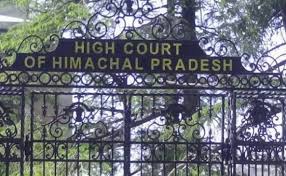
In Jaswinder Singh vs. State of Himachal Pradesh, the High Court of Himachal Pradesh set aside concurrent findings of conviction for rash and negligent driving, ruling that the prosecution failed to prove criminal culpability beyond a reasonable doubt. The Court established that while revisional jurisdiction under Section 397 of the CrPC is supervisory and limited, the High Court has a “salutary duty” to intervene and correct clear perversity or a patent failure of justice. It clarified that “speed” is a relative term and not the sole criterion for determining negligence; because the material witnesses admitted the vehicle was moving “slowly” and failed to describe the specific manner of rashness, the prosecution failed to meet the strict evidentiary threshold required to fasten criminal liability.

  1. Procedural History and Conviction

The petitioner was originally convicted by a Judicial Magistrate under Sections 279 and 337 of the IPC for an accident occurring in 2008, where his Bolero jeep allegedly hit a motorcycle while overtaking a bus. He was sentenced to two months of rigorous imprisonment. This conviction was subsequently upheld by the Sessions Judge, leading the petitioner to approach the High Court in revision.

  1. Scope of Revisional Jurisdiction

The State argued that the High Court cannot act as a second appellate court to re-appreciate evidence under Section 397 of the CrPC. However, the Court ruled that it is explicitly vested with continuous supervisory jurisdiction to prevent the abuse of the judicial mechanism. If a lower court fundamentally misreads evidence or bases a conviction on assumptions rather than proof, the High Court must meticulously examine the record to ensure justice.

  1. Critical Evidentiary Gaps

The High Court’s reversal was primarily based on material contradictions in the prosecution’s evidence:

  • Admissions of Slow Speed: Although the complainant (PW-1) initially claimed the driving was “rash,” he admitted during cross-examination that the vehicle’s speed was actually “slow” and that road repair work was ongoing at the spot.
  • Hostile Eyewitness: The other material witness, a pillion rider (PW-7), turned hostile, failed to identify the petitioner as the driver, and could not state who was at fault.
  • Vague Accusations: The Court noted that simply stating a vehicle was “rash and negligent” without describing the specific manner of driving that endangered life is insufficient for a criminal conviction.
  1. Legal Standard for Criminal Negligence

The Court reaffirmed several key legal principles regarding traffic offences:

  • Speed is Not Sole Criterion: The prosecution must prove an element of criminal rashness or a total disregard for human safety. A slow-moving vehicle can be driven negligently, but the mere occurrence of an accident does not automatically imply criminal culpability.
  • Rejection of Res Ipsa Loquitur: In criminal trials, negligence cannot be presumed by invoking the maxim res ipsa loquitur (the thing speaks for itself). The burden remains entirely on the prosecution to prove every essential element of the charge beyond a reasonable doubt.
  1. Final Outcome

The High Court concluded that the lower courts had improperly appreciated the evidence to the clear detriment of the accused. Finding that the prosecution failed to establish a case worth credence, the Court allowed the revision petition, quashed the previous judgments, and acquitted the petitioner.

STPL (Web) 2026 HP 285

Jaswinder Singh V. State of Himachal Pradesh (D.O.J. 15.05.2026)

Loading Viewer...
Next Story

Service Law: Transfer is legally unsustainable if the employee is posted to a division where no sanctioned post of their cadre exists.

In Sushma Verma vs. Himachal Pradesh University, the High Court of Himachal Pradesh quashed a transfer order for a Senior Private Secretary, ruling that an administrative transfer is legally unsustainable if the employee is posted to a division where no sanctioned post of their cadre exists. While affirming that transfer is an employer’s prerogative, the Court held that this authority must be exercised within the parameters of sanctioned strength and staffing positions. Reaffirming established legal principles, the Court ruled that a public officer must be provided with work and a posting that is commensurately matched to the status of their office, and any administrative adjustment that degrades an official’s status constitutes a violation of service conditions.

  1. Factual Background and Challenge

The petitioner, a Senior Private Secretary, challenged an office order dated February 19, 2024, which transferred her from the Office of the Chief Warden to the Construction Division of Himachal Pradesh University. She contended the move was arbitrary and intended to humiliate her by forcing her to perform the duties of a Junior Stenographer under an official of equivalent pay scale, thereby derogating her professional status.

  1. Administrative Prerogative vs. Sanctioned Strength

The University defended the transfer as a prerogative driven by administrative exigency and noted that the petitioner remained within the main campus. However, the High Court held that:

  • Cadre Limitations: An employer is legally expected to deploy an employee only in a branch or division where their specific cadre post actually exists.
  • Commensurate Postings: While the Court cannot dictate the specific geographical location of a posting, the employer is strictly bound to post the employee against a vacancy commensurate with their current rank.
  1. Protection of Official Status

Relying on Supreme Court precedents (P.K. Chinnasamy and TejshreeGhag), the Court emphasized that public servants hold a substantive public office that carries a specific status.

  • Illegality of Status Reduction: If a transfer substantially diminishes or degrades the status and workflow attached to an office, it amounts to an illegal alteration of service conditions.
  • Verification of Posts: In this case, the University’s own records (Annexure P-5) confirmed that the Construction Division had no sanctioned post for a Senior Private Secretary, rendering the transfer legally bad.
  1. Limitations on Judicial Interference

The Court clarified that its role is not to manage the University’s internal staffing but to ensure legal compliance. It acknowledged the University’s right to utilize the petitioner’s services but mandated that such utilization must occur within the defined staffing position of her category.

  1. Final Outcome

The High Court allowed the petition and quashed the impugned transfer order (Annexure P-4). The University was granted liberty to issue fresh orders to post the petitioner to any division or branch, provided the new posting is made against a post of Senior Private Secretary currently held by her.

STPL (Web) 2026 HP 325

Sushma Verma V. Himachal Pradesh University (D.O.J. 21.05.2026)

Loading Viewer...

Next Story

Panchayat Power under Criminal Law: Police can present investigative report directly before Gram Panchayat for Such offences

In Sunita Devi vs. State of Himachal Pradesh &Ors., the High Court of Himachal Pradesh ruled that the police are legally authorized to present an investigative report (challan) directly before a Gram Panchayat for offenses specified under Schedule III of the Himachal Pradesh Panchayati Raj Act, 1994. The Court clarified that Section 34 of the Act creates an absolute statutory bar preventing regular courts from taking cognizance of such cases, meaning the police do not need to follow a “circuitous route” through a Judicial Magistrate to reach the local council. Furthermore, the Court established that an underlying civil or property dispute does not provide immunity for criminal acts of violence; where medical evidence establishes physical injury, the criminal prosecution must proceed regardless of the dispute’s “civil color”.

  1. Factual Background

The case arose from a property-centric altercation in District Bilaspur, where the complainant alleged that while he was repairing a window, the petitioner (Sunita Devi) and others objected and physically assaulted his family with sticks. An FIR was registered under Sections 115(2) (voluntarily causing hurt), 352 (intentional insult), and 351(2) (criminal intimidation) of the Bharatiya Nyaya Sanhita (BNS). Following the investigation, the police determined these offenses fell under Schedule III of the Himachal Pradesh Panchayati Raj Act, 1994, and presented the final challan directly to the Gram Panchayat Kothi.

  1. Challenge to the Procedure of Filing Challans

The petitioner moved the High Court under Section 528 of the BNSS to quash the proceedings, raising two primary legal contentions:

  • Procedural Illegality: The petitioner argued that under Section 35 of the Act, the police have no autonomous power to file a case directly with a Gram Panchayat. It was claimed that the police must first file before a Judicial Magistrate, who alone has the power to transfer a case to the Panchayat.
  • Civil Dispute Defense: The petitioner asserted the matter was purely civil in nature and that the complainant had given it a “criminal color” merely to harass her.
  1. Statutory Interpretation of the Panchayati Raj Act

The High Court rejected the petitioner’s procedural arguments by analyzing the interplay between Sections 34 and 35 of the Act:

  • Bar on Regular Courts: Section 34 mandates that no regular court shall take cognizance of cases triable by a Gram Panchayat unless specifically authorized.
  • Section 35 Clarification: The Court held that while Section 35 provides a mechanism for a Magistrate to transfer a case if they discover its triable status during proceedings, it does not mandate that all cases must start in a Magistrate’s court.
  • Exclusive Jurisdiction: Since the offenses involved were exclusively listed in Schedule III, the police’s action in filing directly before the competent Gram Panchayat was found to be statutorily sound and free from infirmity.
  1. Primacy of Criminal Infractions over Civil Disputes

Regarding the attempt to characterize the case as a civil matter, the Court held:

  • No Shield for Violence: A person cannot use a civil or property disagreement as a mask for committing criminal acts.
  • Remedy for Civil Injury: Parties aggrieved by civil injuries must seek relief through civil courts rather than taking the law into their own hands.
  • Medical Corroboration: The Medico-Legal Certificate (MLC) on record clearly showed that the complainant and his family had sustained physical injuries, establishing a prima facie criminal case.

Conclusion

The High Court concluded that there was no illegality in the Gram Panchayat taking cognizance of the matter. Consequently, the petition for quashing the FIR and the trial was dismissed, with the Court directing that the trial proceed on its merits based on the evidence.

STPL (Web) 2026 HP 324

Smt. Sunita Devi V. State of Himachal Pradesh &Ors. (D.O. J. 13.05.2026)

Loading Viewer...

Next Story

Service Law: Dismisal Valid – Gaining employment using a forged certificate

In Shri Gaurav Gaur vs. State of Himachal Pradesh and Others, the High Court of Himachal Pradesh dismissed a writ petition challenging the removal of a Veterinary Pharmacist who gained employment using a forged 12th-grade certificate. The Court established that under Rule 15(2) of the CCS (CCA) Rules, 1965, a delinquent employee who fails to file a written representation against an inquiry report waives their right to challenge the inquiry’s factual or procedural findings at the appellate or writ stage. Furthermore, the Court clarified that when a Disciplinary Authority concurs with a well-reasoned inquiry report, the resulting order is not required to be voluminous or “pages and pages” long; its validity is judged by its substantive reasoning and core gist rather than its physical length.

  1. Factual Background and Allegations of Fraud

The petitioner was initially engaged as a Panchayat Veterinary Assistant and later regularized as a Veterinary Pharmacist in 2020. In 2023, he was suspended following allegations that the 12th-standard (10+2) certificate he submitted from the National Institute of Open Schooling (NIOS) was fake. A departmental inquiry revealed that the roll number on his certificate actually belonged to a different individual, and NIOS confirmed that the document was not genuine and did not match their database.

  1. Procedural Waiver under Rule 15(2)

Following the inquiry, the Disciplinary Authority forwarded the report to the petitioner, granting him the mandatory 15-day window to submit a written representation. The petitioner chose not to file any response. The High Court ruled that:

  • Forwarding the report is a procedural safeguard allowing an employee to contest findings before action is taken.
  • By remaining silent, the employee forfeits the right to mount a belated attack against the inquiry’s mechanics in a writ petition.
  • The Disciplinary Authority is then justified in evaluating the record based strictly on the uncontested material before it.
  1. Challenge to “Non-Speaking” Administrative Orders

The petitioner argued that his removal was illegal because the orders passed by the Disciplinary and Appellate Authorities were “non-speaking” and “unreasoned”. He contended that the authorities failed to provide detailed, multi-page justifications for the penalty. The Court rejected this “hyper-technical” argument, holding that:

  • Administrative and quasi-judicial orders are judged by their structural reasoning, not their length.
  • Where an authority entirely concurs with a detailed inquiry report, there is no legal necessity to write an exhaustive or voluminous order.
  • The concise nature of the orders did not render them legally infirm because the underlying fraud was undeniably proved and verified.
  1. Gravity of Misconduct in Public Employment

The Court emphasized that gaining government employment through the strength of a fabricated certificate is a grave charge that strikes at the root of the appointment. The inquiry proved that the petitioner not only used a fake certificate for his initial job but also used it to undergo a Veterinary Pharmacist Diploma Course, thereby causing a loss to the public exchequer.

Final Outcome

Finding that the petitioner’s fraudulent entry into service was substantiated by NIOS and that he had failed to utilize the statutory opportunity to contest the inquiry findings, the High Court concluded that the judicial conscience was satisfied. The petition was dismissed, and the orders for his removal from service were upheld.

STPL (Web) 2026 HP 323

Shri Gaurav Gaur   V. State of Himachal Pradesh And Others (D.O.J. 19.05.2026)

Loading Viewer...

Next Story

Driving a public service vehicle in a state of intoxication – Discharge set aside

In State of Himachal Pradesh vs. Rahul Malhotra, the High Court of Himachal Pradesh set aside a discharge order, ruling that the framing of charges under Section 304-AA of the IPC (causing death while driving a public service vehicle in a state of intoxication) does not require the prosecution to prove a specific numerical threshold of blood alcohol concentration. The Court established that at the preliminary stage of a trial, the mere presence of alcohol in medical samples following a fatal accident involving a public vehicle constitutes a prima facie “state of intoxication”. Furthermore, the Court held that determining whether a driver’s mental faculties or motor skills were actually impaired—specifically when the alcohol level is below the common 80 mg% threshold—is a question of fact that must be adjudicated through expert testimony during a full trial rather than through a “deep-dive” appraisal at the discharge stage.

  1. Factual Background and Initial Discharge

The case involved a December 2019 accident where the respondent, driving a commercial taxi, lost control and plunged into a river, resulting in one death and multiple injuries. A medical examination conducted immediately after the accident revealed an alcohol concentration of 72.62 mg% in his blood and 260.48 mg% in his urine. While the Trial Court framed charges for rash and negligent driving (Sections 279 and 304-A IPC), it discharged the accused under the more stringent Section 304-AA, reasoning that his blood alcohol was below the 80 mg% level often cited in precedents as the threshold for severe impairment of driving skills.

  1. Statutory Requirements of Section 304-AA IPC

The High Court emphasized that Section 304-AA is a special provision targeting the high responsibility of those operating public service vehicles, which includes taxis. To invoke this section, the prosecution must satisfy two baseline elements:

  • The accused was driving or attempting to drive a public service vehicle in a state of intoxication.
  • The act resulted in a death not amounting to culpable homicide or a life-threatening injury. The Court noted that the statute does not prescribe a rigid numerical minimum of blood alcohol to define “intoxication” specifically for the purpose of framing charges.
  1. Distinction Between Prima Facie Case and Final Proof

The Court highlighted the circumscribed jurisdiction of a judge at the stage of framing charges. It ruled that:

  • Limited Evaluation: The court is only required to see if the basic ingredients of the offense are visible on the record.
  • Impermissibility of Meticulous Appraisal: It is legally improper to perform a “threadbare analysis” of medical reports or calculate exact behavioral impairment to drop a charge prematurely.
  • Trial as the Proper Forum: Whether 72.62 mg% of alcohol actually impaired the accused’s mental faculties is a matter to be decided in the totality of evidence during the trial.
  1. The Role of Expert Witnesses

The Court rejected the accused’s argument that the charge should be dropped because the medical officer failed to explicitly state that he was “under the influence of liquor” in the initial notes. The High Court clarified that the examining medical professional is the appropriate expert to depose during the trial regarding how the recorded alcohol levels impacted the driver’s specific motor skills at the time of the accident.

  1. Presumption under the Motor Vehicles Act

The State argued that the “state of intoxication” should be interpreted in light of Section 185 of the Motor Vehicles Act, which sets a threshold of 30 mg per 100 ml for a criminal offense. The High Court agreed that since the accused’s levels (72.62 mg%) significantly exceeded this statutory mark, there was more than sufficient evidence to conclude he was intoxicated for the purpose of proceeding with a trial under the IPC.

Final Outcome

Finding the Trial Court’s discharge order to be a procedural error, the High Court allowed the State’s revision petition. The order of discharge was quashed, and the Trial Court was directed to proceed with the trial against the accused under all sections, including Section 304-AA of the IPC.

STPL (Web) 2026 HP 322

State of Himachal Pradesh V. Rahul Malhotra (D.O.J. 18.05.2026)

Loading Viewer...

Recent Articles