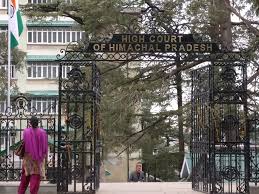

In the case of Anjan Mahajan vs. Binta Devi &Ors., the High Court of Himachal Pradesh dismissed a revision petition challenging the denial of a DNA paternity test, emphasizing that such intrusive medical procedures cannot be used to circumvent the legal presumption of legitimacy.
- Strict Legal Threshold for DNA Testing
The Court established that a DNA test cannot be ordered as a matter of routine or as a “fishing expedition” to prove adultery.
- Presumption of Legitimacy: Under Section 112 of the Indian Evidence Act, children born during a valid marriage are conclusively presumed to be legitimate.
- The “Non-Access” Requirement: To rebut this presumption, a husband must prove “non-access,” which the court defined as the absolute impossibility of marital relations. Living in separate houses, having extra-marital affairs, or being on non-speaking terms does not suffice if the opportunity for access existed.
- Privacy and Dignity: The Court ruled that forcing an individual to undergo a DNA test is an invasion of the right to privacy under Article 21 of the Constitution. Such tests risk “branding a child as a bastard” and subjecting the mother to social stigma.
- Abuse of Process and “Unclean Hands”
A significant factor in the dismissal was the petitioner’s conduct during the litigation:
- Suppression of Material Facts: The petitioner failed to disclose that he had filed identical applications for a DNA test in previous maintenance proceedings, which were dismissed by both the Magistrate and the Sessions Judge.
- Forfeiture of Relief: By concealing these prior dismissals, the petitioner acted with “unclean hands,” thereby forfeiting any entitlement to discretionary judicial relief under Section 151 of the CPC.
- Motive: The Court noted that the application appeared to be a strategic attempt to avoid paying maintenance awarded in earlier proceedings.
- Failure to Prove Lack of Access
The petitioner failed to provide a prima facie case for the test.
- While the petitioner claimed he had no relationship with the respondent since 2007, the respondent countered that he visited her parental house frequently and that the children were born from those visits.
- The petitioner offered no independent evidence to prove it was impossible for him to have had access to his wife during the period the children were conceived.
- Procedural Findings
The High Court clarified that its revisional power under Section 115 of the CPC is limited. It can only interfere if a subordinate court acts without jurisdiction or with material irregularity; it cannot overturn findings of fact simply because it might have reached a different conclusion. In this case, the lower court’s refusal to order the test was found to be legally sound and procedurally correct.
STPL (Web) 2026 HP 248
Anjan Mahajan V. Binta Devi &Ors. (D.O.J. 21.05.2026)
Loading Viewer...