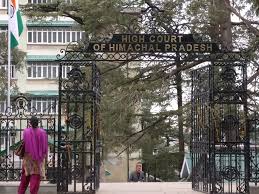


In the case of Ramesh Chand vs. Jai Karan, the High Court of Himachal Pradesh addressed the hierarchy between a tenant’s acquisition of proprietary rights and a landowner’s statutory right of resumption under the Himachal Pradesh Tenancy and Land Reforms Act, 1972. The Court set aside an appellate decree and restored the trial court’s decision, which had dismissed the tenants’ challenge to a land resumption order.
- Resumption vs. Automatic Ownership
The core legal issue was whether non-occupancy tenants automatically become owners of the land they cultivate. The Court clarified several points regarding Section 104 of the Act:
- Not Automatic: The conferment of proprietary rights upon a non-occupancy tenant is not automatic if a landowner has filed a valid resumption application (Form LR-V).
- Subject to Resumption: A tenant’s acquisition of ownership remains strictly subject to the landowner’s statutory right to resume a portion of the land for personal cultivation.
- Surplus Land Only: Proprietary rights are only conferred upon the tenant for the remaining surplus land after the landowner’s portion has been resumed.
- Presumption of Regularity for Official Acts
The plaintiffs (tenants) argued that the resumption order was illegal because the original Form LR-V application was not produced in the civil court evidence. The High Court rejected this reasoning:
- Presumption of Regular performance: Under the law, official acts are presumed to have been performed regularly.
- Evidentiary Weight: A Civil Court cannot declare a Land Reforms Officer’s order illegal solely because the underlying application form was not in the court file, especially when the order explicitly records the pendency of that application in the presence of the parties’ counsel.
- Burden of Proof: The burden lies entirely on the party asserting that an application was never filed or was fraudulent to requisition the official records and prove its absence.
- Procedural Validity and Jurisdiction
The Court found that the Land Reforms Officer had followed proper procedure. The original resumption order was passed in the presence of the legal representatives of the landowner and the counsel for the tenants. Furthermore, the Court noted that a mutation of proprietary rights could not be validly attested in favor of a tenant while a resumption application was still pending.
Outcome: The High Court concluded that the landowner was entitled to resume the land as he possessed less than the prescribed limit, and the tenants were only entitled to the ownership of the remaining portion. The judgment of the Appellate Court was set aside, and the Trial Court’s dismissal of the plaintiffs’ suit was restored.
STPL (Web) 2026 HP 247
Ramesh Chand V. Jai Karan (Deceased) Through Lrs&Anr. (D.O.J. 21.05.2026)
Loading Viewer...