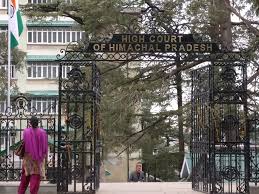

In the case of Chander Jot Singh vs. Dharam Singh & Others (2026), the High Court of Himachal Pradesh dismissed a petition challenging a lower court’s refusal to allow an amendment to a lawsuit after the trial had already concluded,.
Case Background
The petitioner (plaintiff) had originally filed a suit in 2011 for the specific performance of a sale agreement dated December 16, 2008,. After 11 years of litigation, the Trial Court dismissed the suit in June 2022,. While the case was on appeal, the plaintiff filed an application under Order VI Rule 17 of the CPC to amend his original complaint,.
The Proposed Amendment
The plaintiff sought to introduce facts regarding a registered Power of Attorney executed on the same day as the sale agreement,. He claimed that:
- He had paid the full sale consideration of Rs. 6,30,000 at the time of the agreement,.
- The Power of Attorney was an important document that had been handed to his previous counsel but was inadvertently omitted from the original pleadings due to a “bona fide mistake” by the lawyer,.
Court’s Legal Findings
The High Court upheld the First Appellate Court’s decision to reject the amendment based on several key legal principles:
- Requirement of Due Diligence: Under the proviso to Order VI Rule 17 CPC, once a trial has commenced, an amendment can only be allowed if the party demonstrates that, despite due diligence, the matter could not have been raised earlier,,.
- Insufficiency of Blaming Counsel: The Court ruled that simply blaming a lawyer for “inadvertence” or “oversight” does not satisfy the legal requirement for due diligence,. It noted that the case was pending for over a decade, providing ample time for the plaintiff to ensure all relevant facts were pleaded,.
- Preventing “Floodgates”: The Court observed that if such amendments were allowed after a trial is lost, it would open the floodgates for every unsuccessful litigant to try and “fill up the lacuna” in their case by claiming counsel negligence,,.
- Limited Scope of Article 227: The High Court emphasized that its supervisory jurisdiction under Article 227 of the Constitution is narrow,. It cannot act as a second appellate court to re-evaluate facts unless there is a gross abuse of jurisdiction or a manifest error of law, neither of which were present here,,.
Conclusion
The High Court concluded that the First Appellate Court had rightly appreciated the facts and that the proposed amendment was a “feeble attempt” to salvage a dismissed suit,. The petition was dismissed, and the parties were directed to continue with the existing appeal proceedings,
STPL (Web) 2026 HP 217
Chander Jot Singh V. Dharam Singh & Others (D.O.J.08.05.2026)
Loading Viewer...