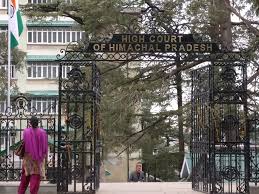


In the case of L&T Himachal Hydro Power Limited vs. Government of Himachal Pradesh and Another (2026), the High Court of Himachal Pradesh dismissed an application filed by the State to refer a dispute to arbitration, ruling that the request was grossly belated and that the State had waived its right to arbitration by participating in writ proceedings for seven years,,.
Case Background
L&T Himachal Hydro Power Limited (the petitioner) filed a writ petition in 2018 challenging the State’s failure to refund an upfront premium of Rs. 84 Crores after the petitioner withdrew from the Reoli-Dugli Hydro Electric Power Project,. The petitioner argued that the project had become techno-economically unviable and that the State’s forfeiture of the deposit was arbitrary and unconstitutional under Article 14,.
While the Pre-Implementation Agreement (PIA) between the parties contained an arbitration clause (Clause 53), the State did not move to invoke it via a formal application until November 2025, long after the writ petition had been active and arguments had nearly concluded,,.
Key Legal Issues and Findings
- Statutory Deadline under Section 8: The Court emphasized that under the amended Section 8 of the Arbitration and Conciliation Act, 1996, an application to refer a dispute to arbitration must be filed “not later than the date of submitting [the] first statement on the substance of the dispute”,,.
- Waiver by Conduct: The respondents filed their detailed reply to the writ petition in September 2018,. The Court held that this reply constituted their “first statement”. By waiting until 2025—seven years later—to file the Section 8 application, the respondents were statutorily barred from seeking a reference to arbitration,,.
- Insufficiency of Preliminary Objections: The State argued that they had raised the arbitration clause as a preliminary objection in their 2018 reply,. However, the Court ruled that merely mentioning the clause in a reply is insufficient; a party must take proactive steps to file a Section 8 application at the threshold,,.
- Submission to Jurisdiction: The Court noted that a party who willingly participates in court proceedings and subjects themselves to its jurisdiction cannot later “turn around” and demand arbitration,. In this case, the State had participated in numerous hearings and even obtained orders regarding the re-allotment of the project during the pendency of the writ,,.
- Maintainability of Writ Jurisdiction: The Court affirmed that writ jurisdiction was appropriate because the dispute involved the arbitrary forfeiture of public money, which raises public law issues and constitutional rights that exist notwithstanding an arbitration clause,.
Conclusion
The High Court dismissed the State’s applications for arbitration, finding they were an attempt to “oust the constitutional jurisdiction” of the Court after years of participation,. The Court ordered the original writ petitions to be listed for final hearing .
STPL (Web) 2026 HP 214
L&T Himachal Hydro Power Limited V. Government Of Himachal Pradesh And Another(D.O.J. 06.05.2026)
Loading Viewer...