
Criminal appeal involving personal liberty cannot be dismissed for default

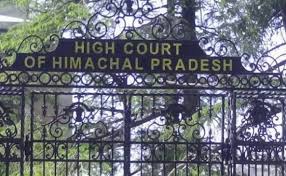
In the case of Ramesh v. The H.P. State Co-operative Agriculture & Rural Development Bank Ltd. (2026), the High Court of Himachal Pradesh ruled that a criminal appeal involving personal liberty cannot be dismissed for default or want of prosecution due to the non-appearance of the appellant or their counsel.

The following is a summary of the judgment:

Case Background

The petitioner, Ramesh, had filed a criminal appeal under Section 415 of the BharatiyaNagarik Suraksha Sanhita (BNSS) against a lower court judgment. On November 29, 2025, the learned Additional District Judge dismissed the appeal “in default” because neither the petitioner nor his counsel appeared when the case was called multiple times. The petitioner approached the High Court seeking to set aside this dismissal and restore the appeal.

Key Findings of the Court

The High Court set aside the dismissal based on the following constitutional and legal principles:

  • Violation of Article 21: The Court held that dismissing a criminal appeal for non-appearance violates the right to life and personal liberty guaranteed under Article 21 of the Constitution. Liberty must be adjudicated through a fair, reasonable, and just procedure, which requires a decision on the merits of the case rather than a summary dismissal.
  • Negligence of Counsel: Relying on the Supreme Court precedent in Md. Sukur Ali v. State of Assam, the Court emphasized that an accused should not suffer for the fault or negligence of their counsel. The “guiding hand of counsel” is considered a constitutional necessity for a fair hearing.
  • Mandatory Alternatives to Dismissal: The Court noted that if an appellant or their counsel fails to appear, the appellate court is duty-bound to take one of the following actions instead of dismissing the case:
    • Adjourn the matter to a later date.
    • Issue fresh notice to the appellant or their counsel.
    • Appoint an Amicus Curiae (legal aid counsel) to represent the accused and argue the case on its merits.
  • Duty of the Court: The Court reaffirmed that judicial obligation requires ensuring proper legal representation to serve the ends of justice, as a layman often lacks the skill to establish their innocence without professional aid.

Legal Conclusion

The High Court concluded that the order dismissing the appeal was legally unsustainable. Consequently, the Court quashed the dismissal order and restored the appeal to its original number and position. The parties were directed to appear before the lower appellate court on April 30, 2026, to proceed with the case on its merits.

STPL (Web) 2026 HP 84

Ramesh V. The H.P. State Co-Operative Agriculture & Rural Development Bank Ltd. (D.O.J. 16-03-2026)

Loading Viewer...
Next Story

Unlocking Structure Compensation: Overriding Unrecognized Shrine Objections in National Highway Acquisitions

This civil writ petition was filed under Article 226 of the Constitution of India by the petitioner, Yagya Chand, seeking directions to the respondent authorities (the Competent Authority-cum-Collector [CALA] and the National Highways Authority of India [NHAI]) to release a supplementary compensation award of Rs. 68,32,650/- (comprising Rs. 66,66,000/- deposited in a fixed deposit with the State Bank of India and an unpaid sum of Rs. 1,66,650/-) awarded for his acquired structure (Structure No. 35) situated in Revenue Village Shillihar, Kullu, H.P. Disbursement was blocked following objections filed by respondent No. 4 (claiming to represent a management committee of an unrecognized religious shrine, Gurdwara Guru Granth Sahib, Bhuntar) on the pretext of pending title litigation. The High Court of Himachal Pradesh allowed the writ petition, holding that an individual who constructs and owns a superstructure on acquired land is independently entitled to structural compensation, and an unrecognized religious entity lacking statutory compliance under the Sikh Gurudwaras Act, 1925 has no locus standi to block such payments.

  • Independent Entitlement to Structural Compensation: Where land acquisition proceedings for a national highway project result in a supplementary award for a built-up structure, the person who constructed, owned, or possessed the superstructure is independently entitled to compensation for that structure. Official patwari records, panchayat documents, and valuer reports verified that the petitioner constructed Structure No. 35.
  • Irrelevance of Underlying Land Disputes: The mere pendency of a title dispute concerning the underlying land—where rival claimants or management committees have sought no specific pleadings, declarations, or relief regarding the ownership of the structure itself—does not justify withholding structural compensation from the recorded builder.
  • Bar and Status of Religious Shrines under the Sikh Gurudwaras Act, 1925: A religious institution or shrine that has not been constituted, declared, or registered in accordance with the mandatory statutory procedures (Sections 3, 7, and 16) of the Sikh Gurudwaras Act, 1925, does not qualify as a legal entity capable of owning property or claiming structures raised by individuals. Consequently, a management committee representing such an unrecognized entity lacks the locus standi to contest or block compensation awarded to a private citizen.
  • Final Directions: The High Court quashed the communication placing the compensation in a static fixed deposit and directed respondent No. 1 (CALA) and NHAI to release the full compensation amount of Rs. 66,66,000/- along with the unpaid sum of Rs. 1,66,650/- and up-to-date interest directly to the petitioner within three weeks.

STPL (Web) 2026 HP 748

Yagya Chand v. Competent Authority-cum-Collector and Ors (D.O.J. 16.10.2026)

Loading Viewer...

Next Story

Bribes Carry No Immunity: Inapplicability of Section 17A Prior Approval to Demands for Illegal Gratification

This appeal arose from a judgment of the Rajasthan High Court which dismissed the appellant’s criminal revision petition challenging the framing of charges under Section 7 of the Prevention of Corruption Act, 1988 (PC Act). The appellant, a police constable, was accused of demanding a bribe of Rs. 1.5 lakhs on behalf of a Superintendent of Police. The primary contention raised by the appellant was that the inquiry and investigation were vitiated for want of prior approval under Section 17A of the PC Act.

The Supreme Court dismissed the appeal and upheld the concurrent orders of the High Court and the Trial Court. The Court held that Section 17A of the PC Act—which mandates prior approval before investigating a public servant—applies strictly to recommendations made or decisions taken in the discharge of official functions or duties, and by no stretch of imagination can it be extended to cases involving the demand or acceptance of illegal gratification, which are pure criminal acts unrelated to official duties.

Summary of the Judgment

  • Scope and Intent of Section 17A of the PC Act:
    • Section 17A prohibits police officers from conducting inquiries or investigations into offences alleged against a public servant where the offence is relatable to any recommendation made or decision taken in discharge of official functions or duties, without prior approval from the competent authority.
    • The provision is designed to protect public servants from malicious interference in bona fide administrative or quasi-judicial decision-making, but it does not provide an omnibus protective umbrella or blanket immunity for criminal misconduct.
  • Exclusion of Bribery and Illegal Gratification:
    • Criminal acts such as misappropriation, cheating, criminal breach of trust, and receiving bribes or demanding illegal gratification are completely foreign to the discharge of official duties.
    • Reaffirming precedents like Central Bureau of Investigation v. Santosh Karnani and Anil Daima v. State of Rajasthan, the Court reiterated that demanding a bribe is a pure criminal act that has no linkage with official recommendations or decisions, thereby rendering Section 17A completely inapplicable.
  • Validity of Prosecution Sanction:
    • The record indicated that valid prosecution sanction under Section 19 of the PC Act had been duly granted prior to the taking of cognizance. The Court noted that even if any procedural irregularity were claimed regarding sanction timing, it would not vitiate the trial on merits.
  • Final Outcome:
    • The Supreme Court dismissed the appeal, holding that the lack of prior approval under Section 17A did not vitiate the proceedings because the provision was never attracted to allegations of bribery.

2026 INSC 1147

Tejaram v. State of Rajasthan (D.O.J. 16.10.2026)

Loading Viewer...

Next Story

Protection of Water Bodies vs. Bona Fide Flat Buyers: Balancing State Resumption with Equitable Relief

These civil appeals arose from orders passed by the Madras High Court which dismissed challenges against the Commissioner of Land Administration’s order setting aside a fraudulently granted ryotwari patta over a water body (Kanakkan Pillai Kuttai) and ordering the demolition of residential apartments built thereon. The land in question (Survey No. 572, Thirumullaivoyal Village) was historically classified in revenue records as Government Poramboke (tank/water body). Despite Section 14-A of the Tamil Nadu Estates (Abolition and Conversion into Ryotwari) Act, 1948, which strictly prohibits ryotwari pattas on private tanks or ooranis, a District Revenue Officer illegally granted a patta in 2011, leading to commercial subdivision, bank mortgaging, and construction of residential flats sold to innocent buyers.

The Supreme Court dismissed the appeals, affirming that public water bodies vest in the State free from encumbrances and cannot be converted into ryoti land or alienated. However, taking cognizance of the plight of innocent flat buyers who purchased properties backed by municipal approvals and revenue mutations, the Supreme Court invoked equitable measures, directing the Chief Secretary and District Collector to allot a vacant, commensurate site to the flat owners within six months before proceeding with the demolition of the 0.22-acre constructed area.

  • Non-Ryoti Nature of Water Bodies and Section 14-A:
    • Beds and bunds of tanks, channels, and communal poramboke lands do not constitute “ryoti land” under Section 3(16) of the Tamil Nadu Estates (Abolition and Conversion into Ryotwari) Act, 1948.
    • Section 14-A of the Act explicitly prohibits the grant of ryotwari pattas for private tanks or ooranis and mandates the cancellation of any patta erroneously or mistakenly issued over such water bodies.
    • Historical revenue records (such as the 1911 RSR Register) take precedence, and municipal zoning notifications (such as “Mixed Residential Zone” under the Town and Country Planning Act) cannot efface the statutory character of public water bodies or transfer ownership.
  • Administrative Fraud and Unauthorized Patta:
    • The 2011 order granting a ryotwari patta was marred by fabricated file numbers, absent jurisdictional reports, and clear administrative malpractices, justifying its annulment by the Commissioner of Land Administration.
  • Protection of Bona Fide Flat Buyers and Equitable Relief:
    • While upholding the state’s power to reclaim water bodies and dismissing the appeals, the Court severely criticized state authorities and municipal bodies whose flawed revenue alterations and building approvals misled innocent purchasers.
    • To prevent severe financial injury and homelessness for families who purchased flats in good faith, the Supreme Court directed the Chief Secretary of Tamil Nadu and the District Collector of Tiruvallur to allot a vacant, commensurate alternative site to the flat owners’ association within six months prior to the demolition of the 0.22-acre construction.
  • Remedies and Final Outcome:
    • The civil appeals filed by the flat buyer and the mortgagee bank were dismissed.
    • The flat owners and the bank were granted liberty to pursue independent civil and criminal remedies for compensation against the developer, landowner, and mortgagor.
    • The State Government was granted freedom to conclude disciplinary and criminal proceedings against erring officials complicit in the fraudulent patta grant.

2026 INSC 1146

S. Gururaj v. The Additional Chief Secretary/Commissioner of Land Administration and Others (D.O.J. 16.10.2026)

Loading Viewer...

Next Story

Learner’s Licence Validity, Motorcycle Provisos, and Insurer Liability in Motor Accident Claims

This appeal was filed under Section 173 of the Motor Vehicles Act, 1988, by the Oriental Insurance Co. Ltd. challenging the motor accident compensation award dated October 21, 2014, passed by the Motor Accident Claims Tribunal, Chamba, Himachal Pradesh. The claim petition arose from a fatal road accident on May 3, 2013, when 37-year-old Babu Ram was struck and killed by a motorcycle being driven by the owner-cum-driver Pankaj Kumar, who possessed a learner’s licence. The Tribunal awarded Rs. 33,97,440/- as compensation and fastened the ultimate liability to pay upon the Insurance Company. The High Court of Himachal Pradesh dismissed the insurer’s appeal, holding that a learner’s licence is a valid licence under the Act, that motorcycles with gears are exempted from the requirement of a dual-control instructor facility under Central Motor Vehicles Rules, and that the insurer failed to discharge its burden of proving any fundamental breach. The High Court slightly enhanced the compensation to Rs. 34,03,030/- to ensure “just compensation”.

  • Validity of Learner’s Licence: A learner’s licence is a valid licence within the meaning of the Motor Vehicles Act, and a person holding it is considered “duly licensed” when driving subject to prescribed conditions. An insurer cannot avoid third-party liability merely because the driver held a learner’s licence at the time of the accident.
  • Burden of Proof on the Insurer: The burden of proving a fundamental breach of the insurance policy—such as alleging that an accompanying instructor did not possess a valid driving licence—rests entirely upon the insurance company. The insurer’s failure to summon or examine the instructor as a witness is fatal to its defense.
  • Exemption for Motorcycles under CMV Rules: Under Rule 3 and Rule 24(3)(v) of the Central Motor Vehicles Rules, 1989, vehicles requiring dual-control facilities for instructors apply to motor vehicles excluding motorcycles. Motorcycles with gears are exempted from dual-control requirements, meaning a learner riding a motorcycle is not legally required to be accompanied by an instructor seated in a position to control or stop the vehicle in the manner required for dual-control vehicles.
  • Computation of “Just Compensation”: The High Court factored in the deceased’s salary as a roller helper with HPPWD (Rs. 16,407 per month), added 50% for future prospects (since he was 37 and worked in the organized sector), accounted for income tax deductions, applied a one-fourth personal expense deduction for four dependents, used a multiplier of 15, and standardized conventional heads under Pranay Sethi and Magma General Insurance (including loss of estate, funeral expenses, and filial/spousal consortium). The total compensation was enhanced from Rs. 33,97,440/- to 34,03,030/- with 7.5% annual interest, payable by the Insurance Company.

STPL (Web) 2026 HP 747

Oriental Insurance Co. Ltd. v. Kushala & Others (D.O.J. 16.10.2026)

Loading Viewer...

Recent Articles